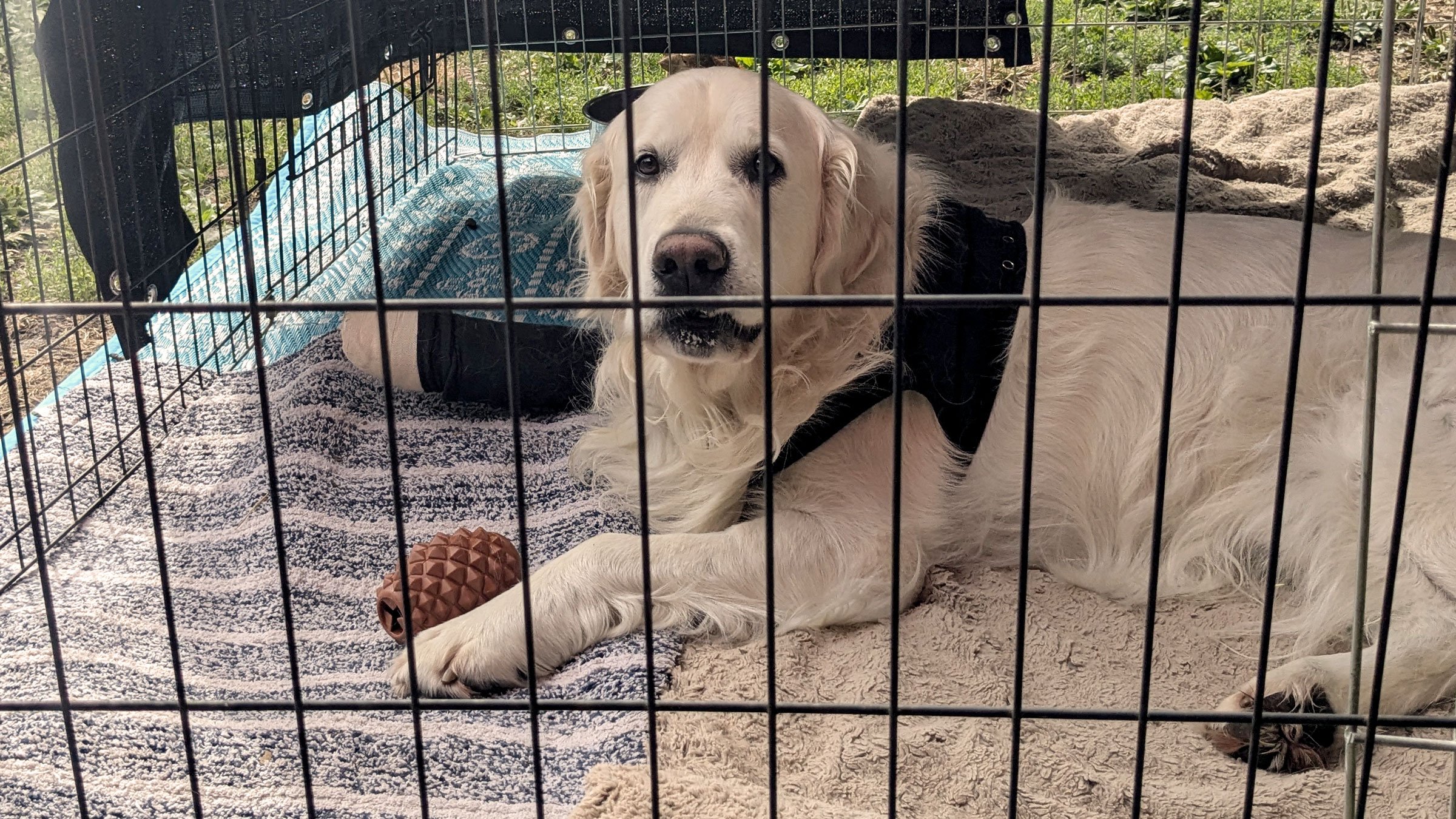
For the dog who does not understand the concept of "resting."
(This post shares personal experience, not professional veterinary advice — always consult your vet for guidance specific to your dog.)
Somewhere around day three or four, the reality sets in: your dog feels better. Not fully healed — just better enough to want to run, jump, wrestle, and generally act like the surgery never happened. And you're standing there, exhausted, trying to explain to a creature who doesn't speak English why they need to lie still for another six weeks. It's one of the hardest parts of this whole process, and almost nobody talks about it.
This guide isn't about the medical side of recovery. It's about surviving the in-between — the weeks where your dog is stir-crazy, you're stir-crazy, and everyone's a little on edge.
Why This Is So Hard (And Why That's Normal)
Physical rest and mental rest are not the same thing. Your dog's body needs stillness, but their brain doesn't stop needing stimulation just because they're confined. That mismatch — an active mind stuck in a still body — is where most of the frustration comes from, for both of you.
And it's worth naming the other side of it too: the boredom, the guilt every time you say no to a game of fetch, the cabin fever of being stuck inside on a nice day because your dog can't be out there with you. That frustration is a completely normal part of this stretch, not a sign you're doing something wrong.
Mental Enrichment That Doesn't Require Movement
The goal here is tiring out the brain without moving the body.
Licking mats or frozen food puzzles. Smear something safe and dog-appropriate on a mat or stuff it in a puzzle toy and freeze it. The licking and problem-solving genuinely wear dogs out.
Puzzle feeders. Instead of a bowl, place kibble in a low-movement puzzle feeder. Nose work is mentally exhausting for dogs in the best way.
Snuffle mats. Snuffle mats work for some dogs but Luke found them too stimulating and wanted to eat from them while standing up, which is something we were trying to avoid.
Short training sessions. Pure brain work — "find it," basic cues, nose targeting — done from a sit or down position. Five minutes of this can be as tiring as fifteen minutes of play.
Appropriate chews. Something safe for their specific recovery stage gives them an outlet that doesn't involve their whole body.
Sensory Enrichment
Window time, if your dog is cleared to be upright or seated — watching the world go by is its own kind of stimulation.
New smells brought to them. A sock from your walk, a leaf, a safe household scent — novelty doesn't require movement to be engaging.
Calm background sound. Soft music or white noise can help an anxious, restless dog settle, especially during the quiet, boring hours.
Bring the outdoors inside, with live streaming video at Explore Live Nature Cams
Managing the Zoomies Urge
There will be moments — after a nap, when you get home, when the doorbell rings — where you can see the old energy trying to burst out.
Have a calm redirect ready before it happens: a chew, a licking mat, a hand on their chest and a quiet voice.
Try not to scold or panic in the moment — that adds excitement and stress, which is the opposite of what you want. Calm energy from you tends to bring calm energy from them.
Bonding Without Activity
Recovery doesn't have to mean disconnected.
Slow petting or gentle massage can be genuinely calming for both of you — it's rest that still feels like closeness.
Sometimes the most valuable thing you can do is just sit with them. No task, no training, just presence. That counts for more than it feels like in the moment.
Taking Care of Yourself, Too
This part matters as much as anything else in this guide: this phase is draining for you, not just your dog. The hovering, the guilt, the constant vigilance — it adds up.
Give yourself permission for the house to be a little messier than usual, for more takeout nights, for asking someone else to take a shift watching the dog so you can step outside for ten minutes. You're allowed to find this hard. Managing it well doesn't mean it doesn't wear on you.
(If you're deep enough into this that the e-collar fatigue is setting in, you're not imagining it — here's an honest update from partway through Luke's own recovery, e-collar exhaustion included. And if you're further along and the uncertainty itself is the hardest part, this one is about sitting with that honestly too.
Signs Recovery Is Progressing
Small wins are still wins:
Settling into rest faster than they did last week
Less whining or pacing at the gate
Longer stretches of calm between bursts of restlessness
These are the signs that the hard part is working, even when it doesn't feel like it day to day.
The full recovery series: If you're just starting out, the first 48 hours checklist covers what to do the moment you bring your dog home. And if you haven't set up the physical space yet, this dog-proofing guide walks through it step by step. Together, these three cover the whole arc — from panic, to setup, to the long stretch of getting through it.