
About
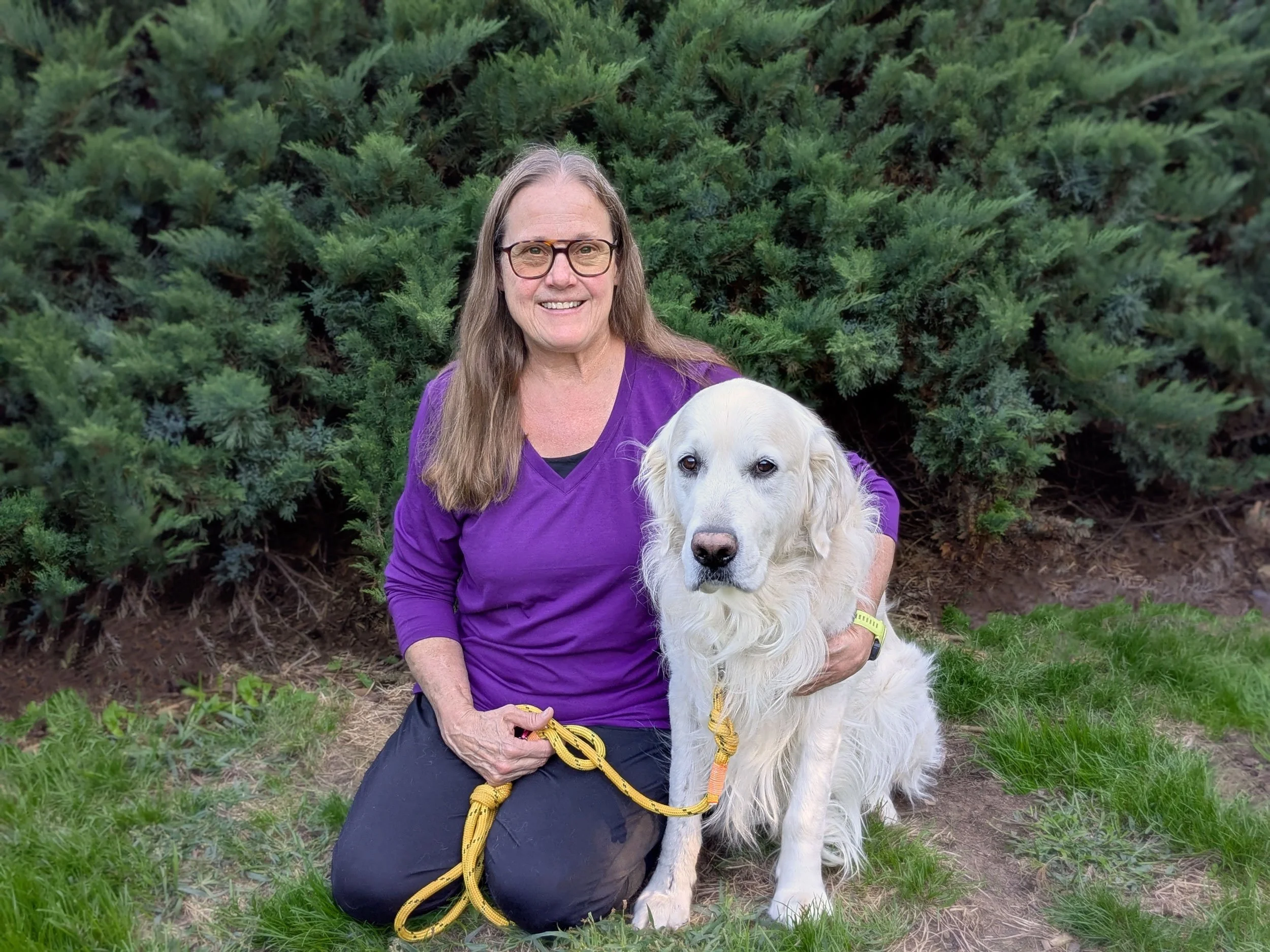
This site exists because of Luke.
In October 2023, my golden retriever Luke fractured and partially dislocated several of the tiny bones in his carpus, what we humans call a wrist. We began with conservative treatment — wearing a splint for 8 weeks followed by several months of rehab. We were hoping the joint would stabilize. It didn’t. He needed a major surgery — pancarpal arthrodesis — to fuse the joint and give him a shot at a comfortable, pain-free leg again. Recovery from the surgery was slow. It took a full year for the bones to fuse.
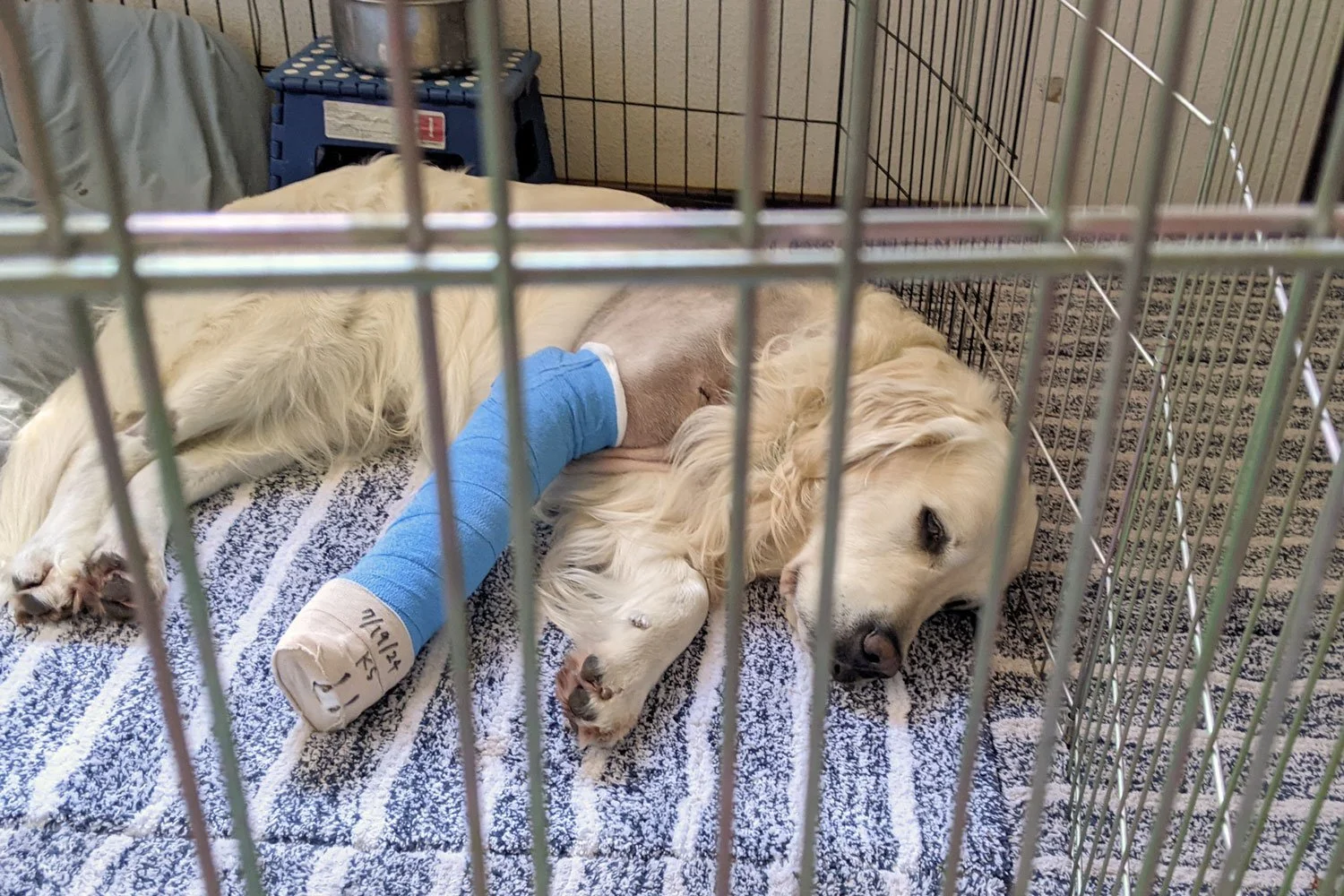
We got through it. We thought that chapter was closed.
Two years after the surgery, in July 2026, the area developed an infection, and Luke needed surgery again — this time to remove the metal implants that had been holding everything together. After six weeks in bandages plus strict rest, radiographs showed the bones were not healing. We then spent eight weeks trying to save his leg with antibiotics and shockwave therapy. His latest radiographs show no new damage, but the holes left by the screws haven't filled in yet. So we're in a new phase: gradually increasing his exercise with short walks to encourage the bones to heal, with another checkup in three months. His bones are weakened for now, and if the leg were to break, he would need an amputation.
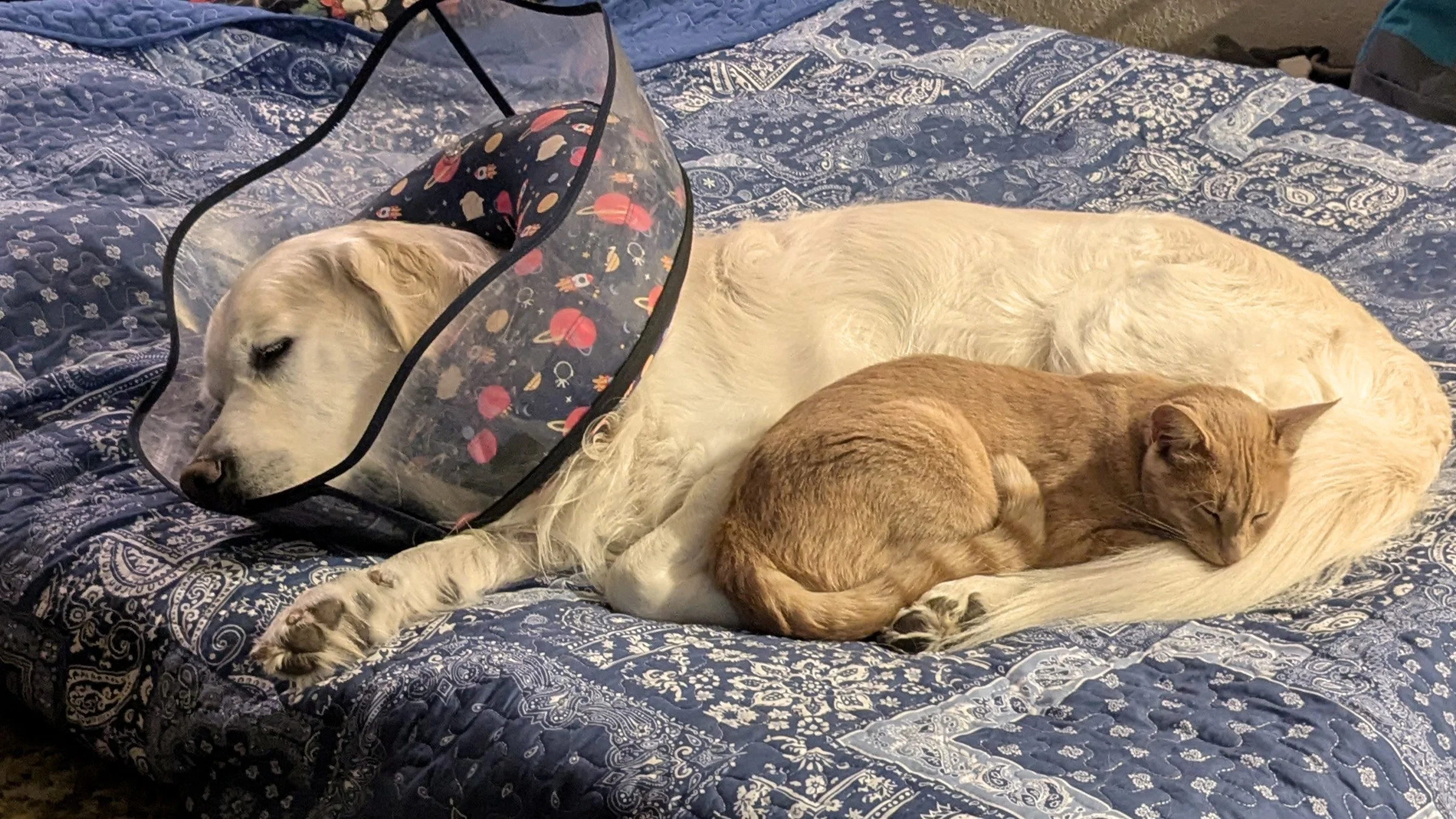
I'm telling you this not because I want sympathy, but because I want you to know exactly who's writing the things you're reading on this site. I'm not a vet. I'm not a professional pet blogger who researched this topic once and moved on. I am, right now, in the thick of it — googling things at midnight, rearranging furniture for the third time, and trying to keep a playful dog calm who has absolutely no interest in being calm.
Why I built this
When Luke first got hurt, I remember the exact feeling of coming home from the vet with a discharge sheet full of medical terms and zero idea what to actually do. What do I feed him. Where does he sleep. How do I keep him from jumping on the couch or our bed when every instinct in his body wants to. Nobody hands you that list. You just have to figure it out, exhausted, scared, one hour at a time.
This site is the list I wish I'd had. Not a replacement for your vet — always follow their specific guidance — but the practical, real-world, "here's what actually helped" layer that sits underneath the medical instructions. The stuff that makes the difference between white-knuckling through recovery and actually managing it.
What you'll find here
Guides built from real experience: First 48 Hours After Surgery, How to dog-proof your home for crate rest, and — maybe most importantly — How to survive the long, boring, emotionally exhausting middle stretch of recovery with a dog who feels better long before they're supposed to act like it.
I update this as Luke and I go through each new stage, so if you're in the middle of your own dog's recovery right now, you're not reading something written once and forgotten. You're reading something written alongside you. You can follow along with Luke's Recovery series as it happens.
A note on where we are right now
We don't know yet whether Luke's bones will heal well enough for him to keep his leg for good. I'm not going to pretend that uncertainty isn't there, because I know some of you are sitting with the exact same uncertainty about your own dog. If that's you — I see you, and I'm genuinely glad you found this page.
Whatever's going on with your dog, I hope something here makes the next hour a little easier.
— Grace Nightsky
Want the practical stuff first? Start Here has the guides most people need right away.