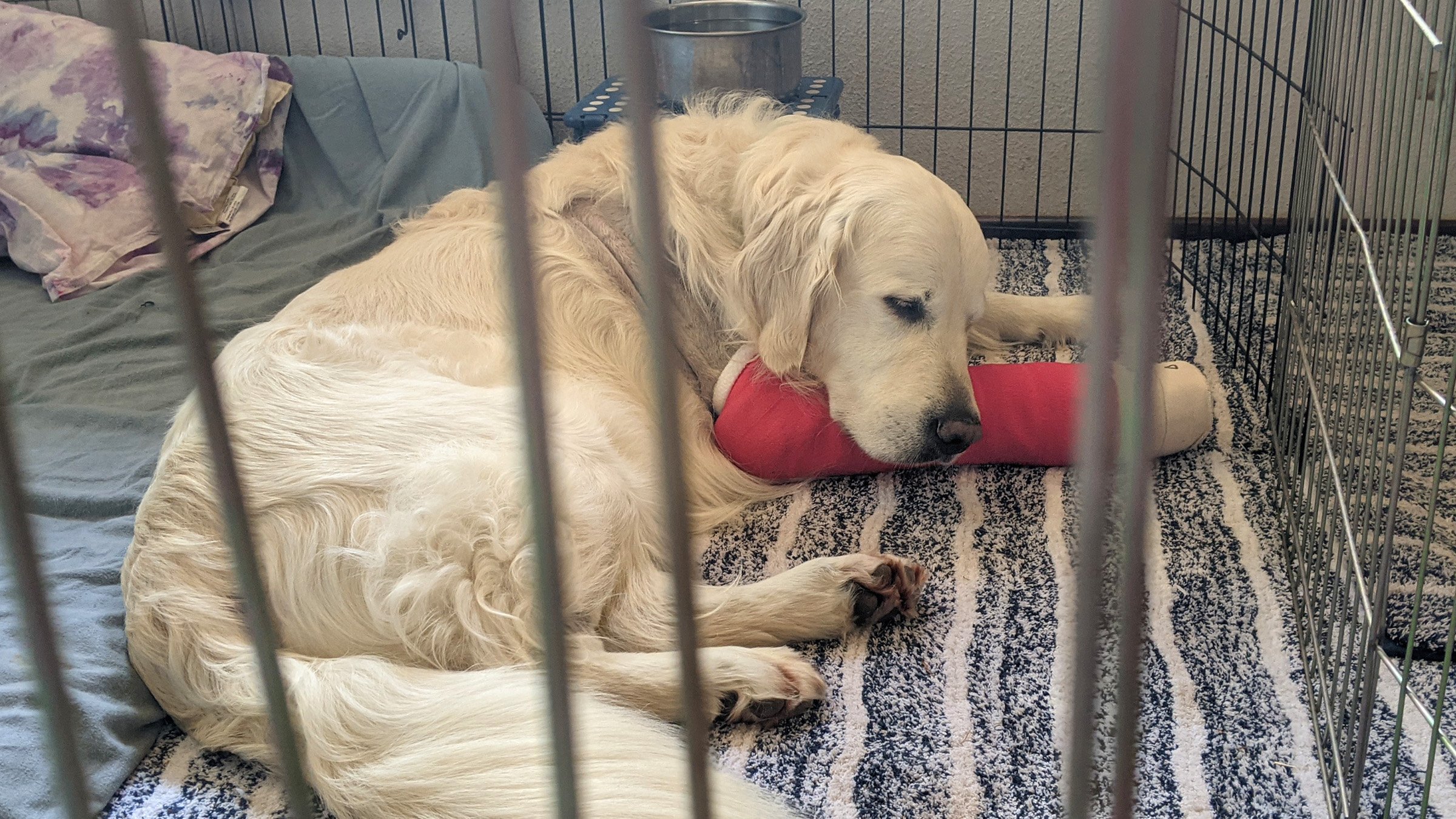
Everything to have ready before you bring your dog home — so you're not scrambling.
(This post shares personal experience, not professional veterinary advice — always consult your vet for guidance specific to your dog.)
There's a specific kind of panic that hits on the drive home from the vet. Your dog is groggy, maybe whimpering, definitely confused, and you're gripping the steering wheel thinking: okay, now what? Nobody hands you a manual. You just get a discharge sheet full of medical jargon and a dog who's counting on you to figure the rest out.
I've been there. This guide is the list I wish someone had handed me — not the medical stuff (your vet's got that covered), but the real, practical, "what do I actually do" stuff for the first 48 hours.
Before You Even Pick Your Dog Up
Do this the night before or the morning of surgery, while you've still got a clear head:
Set up the recovery space. Pick one quiet, low-traffic room or corner — away from stairs, slippery floors, and other pets. (Full setup guide here if you want to go deeper.)
Do the grocery/pharmacy run early. Soft food, ice packs, baby gates, extra towels — get it all before you're exhausted and juggling a recovering dog.
Clear the space. Move rugs that bunch up, block off stairs, put away anything they could jump on or off of.
Give the household a heads-up. Kids, other pets, roommates — let everyone know the plan is calm and quiet for the next couple of days. Excitement is the enemy right now.
The Car Ride Home
This is not the time to test how tough your dog is.
Lift, don't let them jump. A folded towel or blanket makes a simple sling under the belly for support.
Rear compartment, not the front floor. Somewhere they can lie flat and won't slide around on turns.
Skip the errands. Straight home. No stops, no "quick" anything.
Consider a ramp. With larger dogs a ramp can be very helpful for getting them in and out of the car. The one I use with Luke is the PetSTEP folding pet ramp. When using this ramp be careful to not pinch your fingers.
Hour 1–6 at Home
Grogginess is normal. Wobbliness, disorientation, and sleepiness from anesthesia are expected in these early hours. (This is general reassurance, not a medical guideline — always follow your vet's specific discharge instructions for what's normal for your dog's procedure.)
Water before food. Offer small amounts of water first. Food can usually wait until they're more alert — check your discharge papers for your vet's specific timing.
Keep the house quiet. No visitors, no other dogs coming to say hi, no vacuum running in the next room. Boring is good right now.
The Cone (or Recovery Collar) Reality
Let's be honest: they're going to hate it, and you're going to feel bad about it. That's normal too.
It genuinely helps to give them a minute to just bump into a few things and adjust before you panic and take it off.
If the classic plastic cone is a disaster for your dog, inflatable collars or soft recovery suits are worth trying instead — some dogs tolerate them far better.
What worked for Luke: the Suitical recovery sleeve worked really well for him. We used it when Luke was in bandages or a splint. It did a beautiful job at keeping him from licking his bandages and was the most comfortable for him to wear.
Whatever you use, the goal is simple: keep them from licking or chewing the incision and the bandages. That's non-negotiable, even if the tool changes.
Bathroom Breaks Without Reinjury
Leash only, every time — no backyard free-roaming yet, even if you trust them.
No stairs. Carry or sling-support them if stairs are unavoidable.
Short and boring. This is a bathroom trip, not a walk. Out, done, back inside.
What to Have Within Arm's Reach
Keep this cluster of items right next to wherever your dog is resting, so you're never hunting for something at 2am:
Medications, pre-sorted by time/dose. Use a notepad to write down the time doses are actually given. It is helpful to use a clock app on your phone to set daily alarm reminders.
Water bowl (and food, once cleared)
One safe chew or comfort item — nothing that requires jumping or lots of movement to enjoy
Extra bedding/towels for accidents or ice pack use
Your phone, charged, with the vet's after-hours number saved
Pen and paper to jot down questions for the vet and to take notes on your dog’s symptoms
(This list doubles as the core of the free Recovery Checklist — grab the printable version here.)
Signs You're Doing Great
You're going to feel like you're not doing enough. You'll hover, second-guess every whimper, and maybe cry a little in the bathroom when no one's looking. That's not failure — that's just what loving a hurting dog feels like.
If your dog is resting, eating a little, drinking water, and you're following the discharge instructions — you're doing it right. You don't have to be perfect. Just present.
When to Call the Vet
This isn't a full medical list — always defer to the specific instructions your vet gave you at discharge. But as a general reminder, reach out if you notice:
No urination within the timeframe your vet specified
Vomiting, or refusing water for an extended period
Excessive swelling, redness, or discharge at the incision site
Signs of significant pain that don't improve with prescribed medication
For a full medical breakdown of aftercare warning signs, PetMD's guide is a solid, vet-reviewed resource.
What's next: If you haven't set up the recovery space yet, this guide walks through it step by step. And if you're a few days in and wondering how you're going to survive weeks of crate rest with a dog who has zero interest in "resting," this one's for you.